
Table des matières
Depuis des années, Administrateurs Citrix ont eu recours à Services de Création de Machines (MCS) et Services d'approvisionnement pour fournir des bureaux virtuels et des serveurs d'applications.
Bien qu'essentiels, ces outils n'ont pas été conçus pour les environnements hybrides modernes. couvrant les centres de données sur site, Azure, AWS et les emplacements périphériques, où les mises à jour rapides, les configurations cohérentes et l'automatisation sont essentielles.
XOAP remplir cette lacune, automatisation et standardisation le cycle de vie complet de l'image autour des déploiements Citrix. Au-delà de Citrix, XOAP rationalise également la gestion des appareils physiques et du cycle de vie complet des terminaux, offrant une automatisation, une conformité et un contrôle opérationnel constants.
Qu'est-ce que MCS et PVS font
- SM: Les services de création de machines (Machine Creation Services) clonent des postes de travail virtuels ou des serveurs à partir d'une image maître. Ils sont simples et adaptés aux déploiements de petite à moyenne taille.
- PVSLes services de provisionnement diffusent un disque virtuel partagé sur plusieurs machines, offrant efficacité, déploiement rapide et stockage réduit.
Le défi
Les deux MCS et PVS se concentrent uniquement sur l'approvisionnement et s'appuyer sur les administrateurs pour maintenir manuellement Gérer les images et les configurations.
Cependant, la majeure partie de l'effort opérationnel se produit avant et après provisionnement et comprend :
- images de construction
- application de correctifs du système d'exploitation
- installation/mise à jour d'applications
- maintien des meilleures pratiques
- gestion des environnements hybrides.
MCS et PVS ne pas automatiser création d'images, de packaging d'applications, de déploiement hybride, de gestion de versions ou des flux opérationnels, ce qui conduit à complexité, risque et coût accru à mesure que les organisations grandissent.
📌 À lire aussi : Gestion des appareils au-delà d'Autopilot
XOAP : Automatisation du cycle de vie de l'image
XOAP ne remplace pas Citrix ou MCS/PVS ; il automatise tout ce qui y est lié.
Citrix livre ensuite les images aux utilisateurs.
Cette approche multicouche offre déploiements plus rapides, moins d'erreurs, environnements cohérents et réduire les coûts opérationnels, loin de là évolutif et pérenne que de reposer uniquement sur le MCS/PVS.
Caractéristiques principales
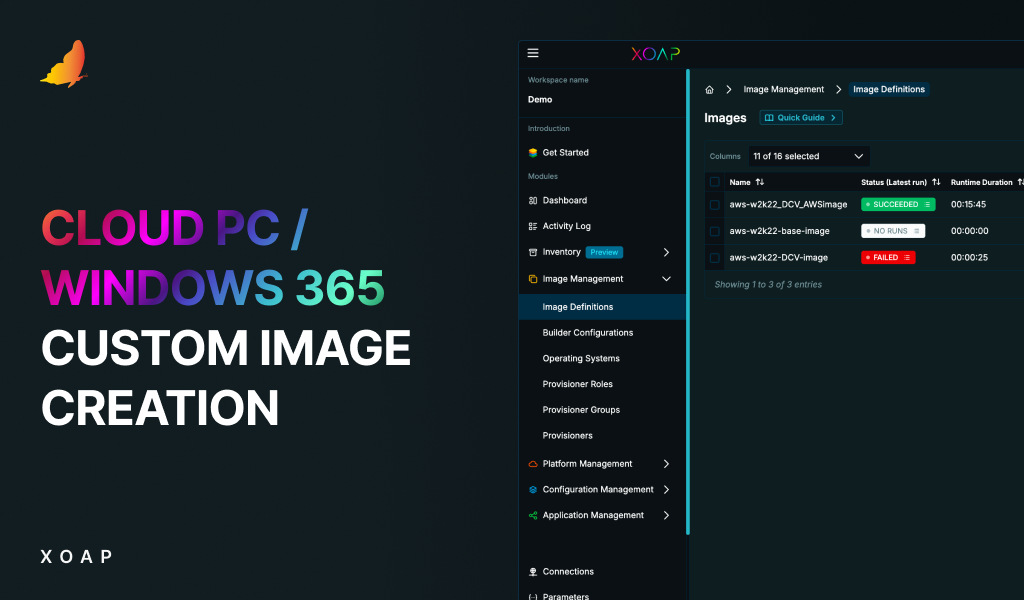
1. Création et versionnement automatisés d'images
Vous définissez un pipeline une fois. XOAP alors construit automatiquement des images, applique des configurations de bonnes pratiques, installe des applications, impose des conventions de nommage, versionne les sorties et permet le retour arrière.
Le résultat : images de référence reproductibles et fiables prêtes pour la diffusion MCS ou PVS.
📌 En savoir plus : XOAP Image Management
2. Configuration en tant que code
L'application centralisée de la configuration empêche la dérive, suit les modifications et garantit conformité sur toutes les machines. Les serveurs et bureaux Citrix restent cohérents, prévisibles et alignés sur les stratégies.
3. Déploiement et empaquetage d'applications
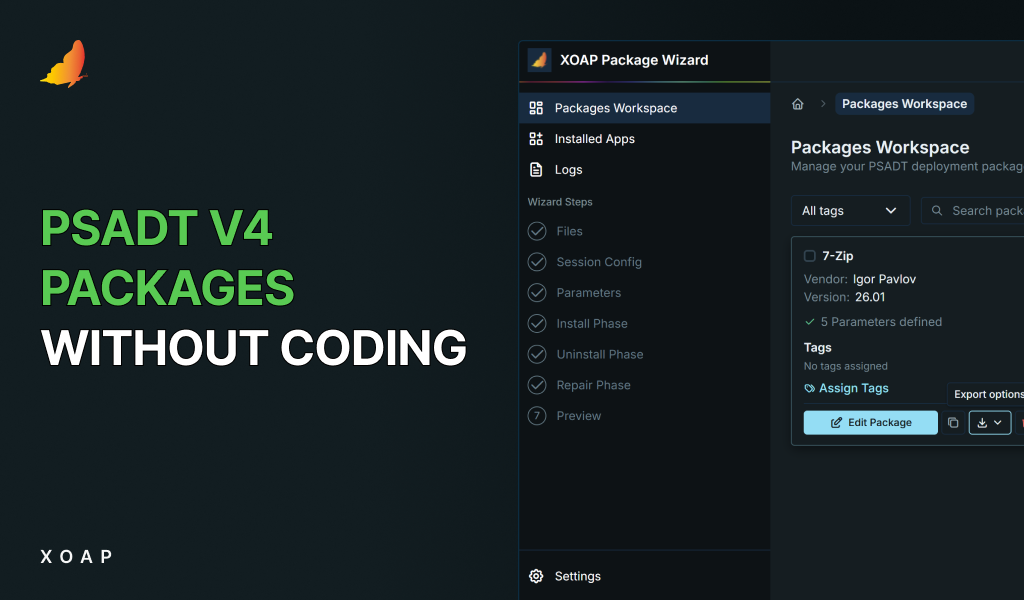
Les applications sont empaquetées une fois, déployées de manière cohérente et mis à jour sans reconstruire les images, réduisant le gonflement des images et accélérant les cycles de mise à jour.
4. Provisionnement d'infrastructures multi-cloud et sur site
XOAP automatise la création d'infrastructure sur vSphere, Nutanix, L'azur, AWS et Google Cloud, apportant une cohérence dans des environnements distribués.
5. Cycle de vie, gouvernance et conformité
XOAP centralise les correctifs, les reconstructions d'images, la surveillance et gestion multi-locataire, réduisant le travail manuel et garantissant la conformité aux politiques.
Flux de travail traditionnel vs XOAP
Sans le protocole POX :
1. Mettre à jour manuellement l'image principale → 2. Installer les applications → 3. Appliquer les correctifs du système d'exploitation → 4. Capturer l'image → 5. Pousser vers MCS/PVS → 6. Dépanner → 7. Répéter
Avec XOAP :
1. Mettre à jour le pipeline d'images → 2. Automatisation XOAP
Des images cohérentes et conformes sont livrées à Citrix MCS ou PVS avec effort manuel minimal.
Quand utiliser XOAP
Bien que XOAP puisse automatiser presque tout dans votre infrastructure informatique, il vous sera le plus utile dans les contextes suivants :
• Environnements Citrix larges ou distribués.
• Déploiements hybrides entre le cloud et sur site.
• Exigences strictes en matière de sécurité ou de conformité.
- prestataires de services Gérer plusieurs locataires.
• Équipes visant à réduire le travail manuel.
Dernières réflexions
MCS et PVS restent essentiels pour le provisionnement Citrix, mais les exigences modernes de l'informatique hybride automatisation au-delà du provisionnement. XOAP y parvient en automatisant la création d'images, le déploiement d'applications, la gestion de la configuration, le provisionnement de l'infrastructure et la gestion complète du cycle de vie des points de terminaison.
Pour les organisations recherchant des déploiements plus rapides et plus fiables, une efficacité opérationnelle et une conformité accrues, XOAP est un puissant couche d'automatisation qui complète Citrix et modernise les opérations informatiques.