
Table des matières
AWS Systems Manager et XOAP aident tous deux les organisations à gérer leur infrastructure à grande échelle. En apparence, ils se recoupent, mais ils ont été conçus pour des situations différentes. Savoir lequel convient le mieux dépend moins d'une comparaison de fonctionnalités que de la compréhension de ce que chaque outil a été initialement conçu pour faire.
Ce que AWS Systems Manager fait bien
Intégré à la plateforme AWS, Systems Manager propose la gestion des correctifs, l'exécution de commandes à distance, la gestion de sessions, le stockage sécurisé des informations sensibles via Parameter Store et le contrôle de la configuration par le biais de State Manager. Au sein d'un seul compte AWS exécutant principalement des charges de travail basées sur EC2, il s'intègre naturellement et bon nombre de ses fonctionnalités principales sont incluses dans l'utilisation standard d'AWS.
Le produit fonctionne au mieux lorsque l'environnement est très largement natif d'AWS. Plus une organisation s'éloigne de ce scénario, plus ses limites deviennent pertinentes.
Où les deux produits diffèrent :
Gérer plusieurs clients
SSM est construit autour d'une seule organisation AWS. Maintenir plusieurs clients correctement séparés signifie généralement la mise en place de comptes AWS séparés avec leurs propres politiques IAM. Cela fonctionne, mais cela ajoute du temps de configuration et de la surcharge de maintenance continue pour chaque nouveau client ajouté.
La multi-location est au cœur de la conception de XOAP, ce n'est pas quelque chose qui nécessite une configuration supplémentaire. Chaque client dispose de son propre espace isolé au sein de la plateforme, avec des contrôles d'accès et des politiques disponibles par défaut. Les MSP gérant de nombreux clients trouveront que cela élimine une quantité importante de travail d'infrastructure répétitif..
Environnements hybrides et mixtes
Grâce à sa fonctionnalité d'activation hybride, SSM peut gérer des machines locales et non AWS aux côtés de charges de travail cloud. Sa cible de conception principale reste néanmoins AWS, de sorte que la gestion de l'infrastructure en dehors d'EC2 a tendance à nécessiter des étapes de configuration supplémentaires qui ne seraient pas nécessaires pour les charges de travail natives du cloud.
XOAP traite l'infrastructure cloud et l'infrastructure locale de manière égale dès le départ. Un serveur dans un centre de données est géré de la même manière qu'une instance cloud, via la même interface et la même logique d'automatisation. Les équipes disposant d'une part importante de leur infrastructure en dehors d'AWS trouveront par conséquent une gestion quotidienne considérablement plus cohérente.
Gestion des images
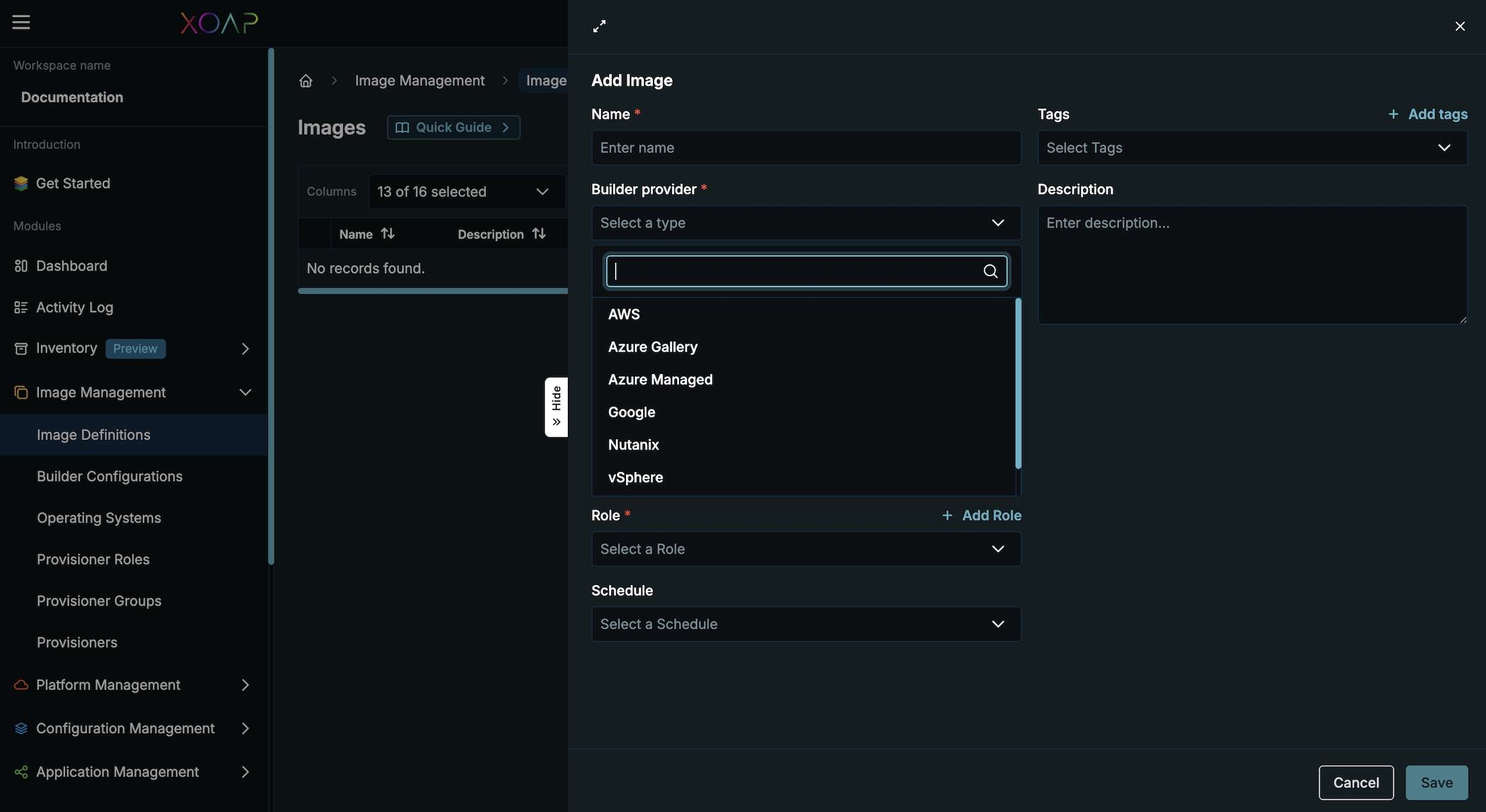
AWS propose EC2 Image Builder pour créer et gérer des images de machines au sein d'AWS, avec une sortie au format AMI pour les charges de travail EC2. La solution Image Management de XOAP est conçue pour fonctionner aussi bien dans des environnements cloud que sur site. Les entreprises qui ont besoin d’images cohérentes sur l’ensemble d’un parc informatique mixte, et non pas uniquement au sein d’AWS, peuvent tirer parti de cette portée élargie.
Coût
De nombreuses fonctionnalités de SSM sont incluses sans frais supplémentaires dans AWS. Cependant, pour qu'il fonctionne bien sur plusieurs clients ou dans des environnements hybrides, il faut souvent créer des outils personnalisés pour combler les lacunes. Ce temps d'ingénierie représente un coût réel, même si la licence logicielle n'en a pas.
XOAP fonctionne sur un modèle d'abonnement. L'idée est que dans les environnements multi-clients ou complexes, la réduction des frais d'ingénierie justifie le coût par rapport à la création de capacités équivalentes sur les outils natifs d'AWS.
Un exemple concret
Considérez un MSP intégrant un nouveau client. Le client dispose de 40 machines Windows réparties entre des serveurs sur site et des instances AWS, et doit prouver sa conformité en matière de correctifs avant un audit à venir.
Avec SSM, l'équipe devrait configurer des activations hybrides pour les machines locales, mettre en place une séparation au niveau du compte pour isoler ce client des autres et rassembler un rapport de conformité provenant de plusieurs sources. Rien de tout cela n'est impossible, mais chaque étape nécessite un travail délibéré en dehors de l'outil principal.
Le processus XOAP prévu est de créer un nouveau locataire, de déployer l'agent sur toutes les machines, où qu'elles se trouvent, d'appliquer les stratégies pertinentes et d'exporter un rapport de conformité, l'isolement du locataire étant géré au niveau de la plateforme tout au long du processus.
Les deux routes mènent au même résultat. La différence réside dans la quantité de travail périphérique nécessaire pour y parvenir.
Lequel ?
Le SSM convient aux organisations qui fonctionnent principalement sur AWS, avec des équipes à l'aise dans la console AWS et sans besoin significatif d'isolation multi-clients ou de gestion multiplateforme.
XOAP est mieux positionné pour les MSP et les équipes d'infrastructure qui gèrent plusieurs clients avec des exigences de séparation strictes, qui travaillent dans des environnements mixtes (cloud et sur site), ou qui souhaitent réduire l'effort manuel nécessaire pour maintenir la cohérence de l'automatisation à grande échelle.
Outils différents, contextes différents
AWS Systems Manager (SSM) et XOAP sont conçus pour des priorités et des réalités opérationnelles différentes, plutôt que pour répondre au même besoin. Le XOAP se concentre sur le soutien du fonctionnement réel des organisations dans des environnements diversifiés, de sorte que la bonne approche est celle qui s'aligne sur les flux de travail réels et les exigences d'infrastructure.
Cette distinction mérite une attention particulière lors de l'évaluation de l'une ou l'autre plateforme, notamment dans les environnements multi-clients ou hybrides.
Pour voir comment XOAP gère ces scénarios en pratique, réserver une démo.
Avis de non-responsabilité :
Cet article est fourni à titre informatif et comparatif uniquement. Tous les noms de produits, marques commerciales et marques déposées mentionnés sont la propriété de leurs propriétaires respectifs. Les informations présentées reflètent la documentation publiquement disponible et les capacités générales des produits au moment de la rédaction.
Cette comparaison ne constitue pas un conseil juridique, financier ou d'approvisionnement. Il est conseillé aux lecteurs d'évaluer indépendamment chaque plateforme en fonction de la documentation officielle et des directives du vendeur. Toute référence aux modèles de tarification reflète les informations de prix publiquement disponibles et ne constitue pas des interprétations juridiques ou financières.
L'analyse vise à fournir un aperçu objectif des différences architecturales et des cas d'utilisation prévus, et non à affirmer une supériorité, une insuffisance ou des revendications concurrentielles.