
Inhaltsübersicht
Modern IT environments require automation across multiple layers, from provisioning cloud infrastructure to maintaining operating systems, applications and end user environments over time. XOAP and Spacelift are sometimes compared because both interact with infrastructure, but they operate at different stages of the IT lifecycle. This article examines their architectural focus and operational scope to clarify how each platform fits within enterprise environments.
XOAP: The hybrid IT automation platform
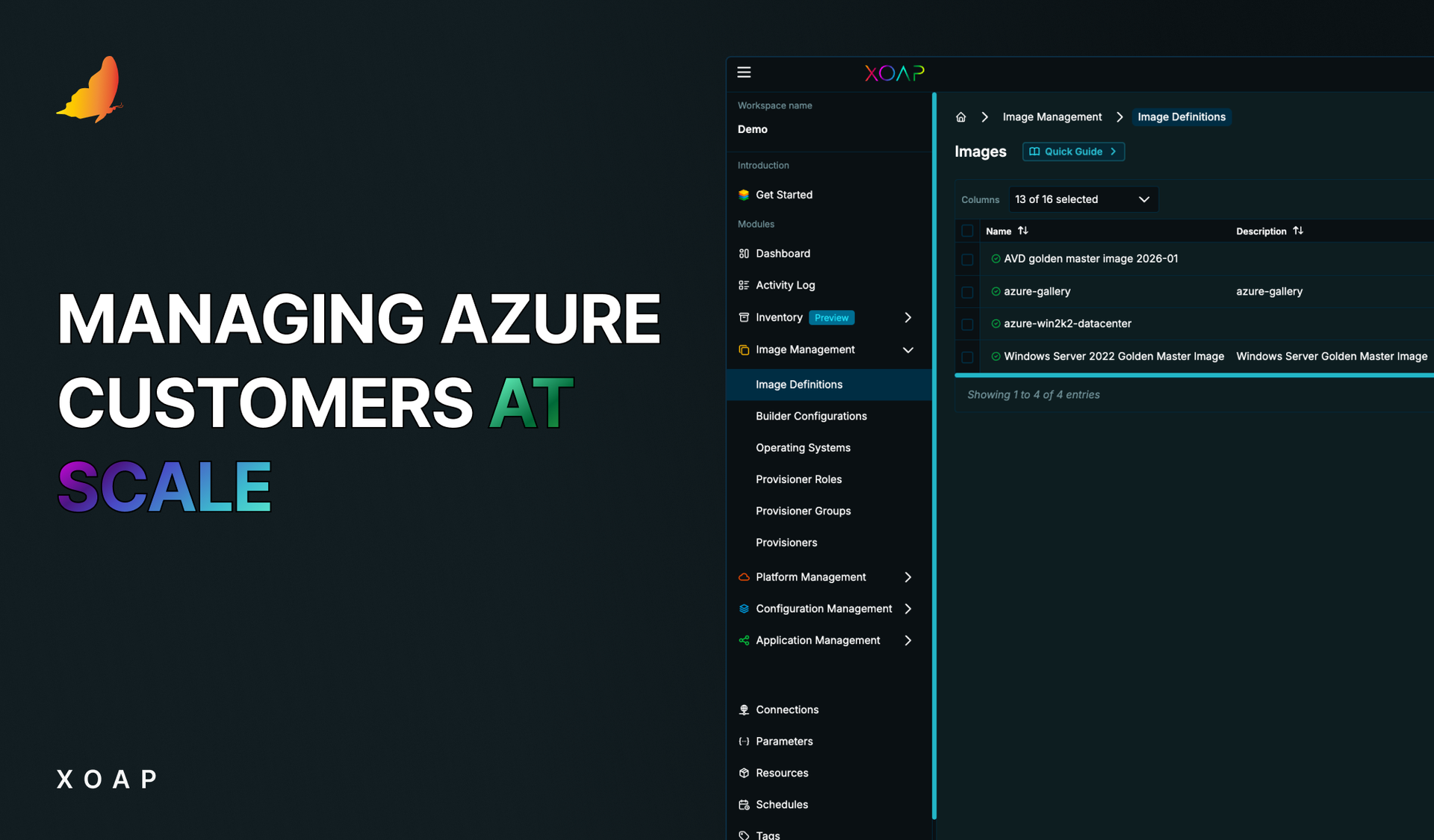
XOAP is designed to manage the full IT lifecycle, covering cloud infrastructure, operating systems, applications and workplace environments. It supports automation for Azure Virtual Desktop (AVD) and Windows environments, including application packaging and deployment.
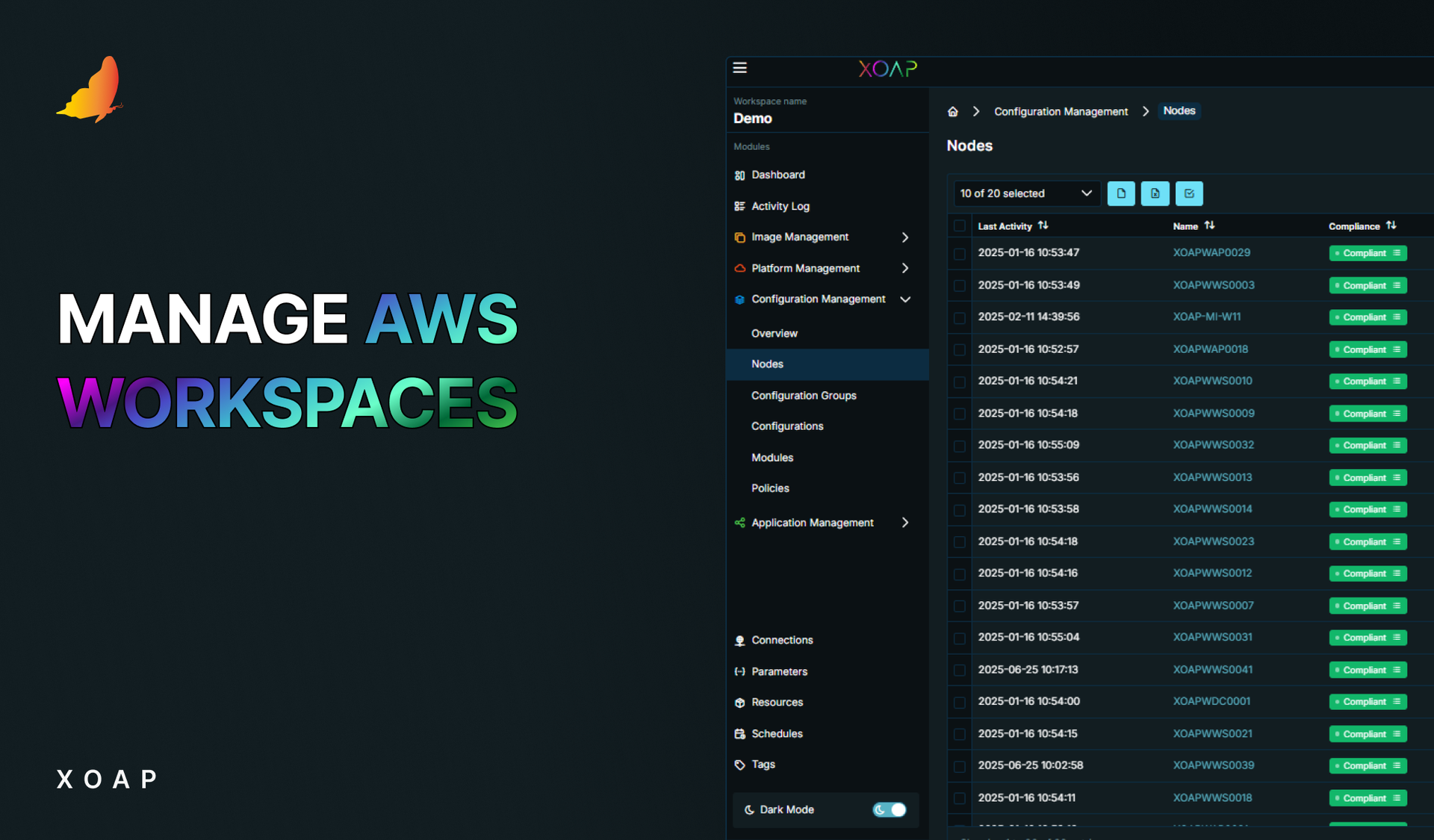
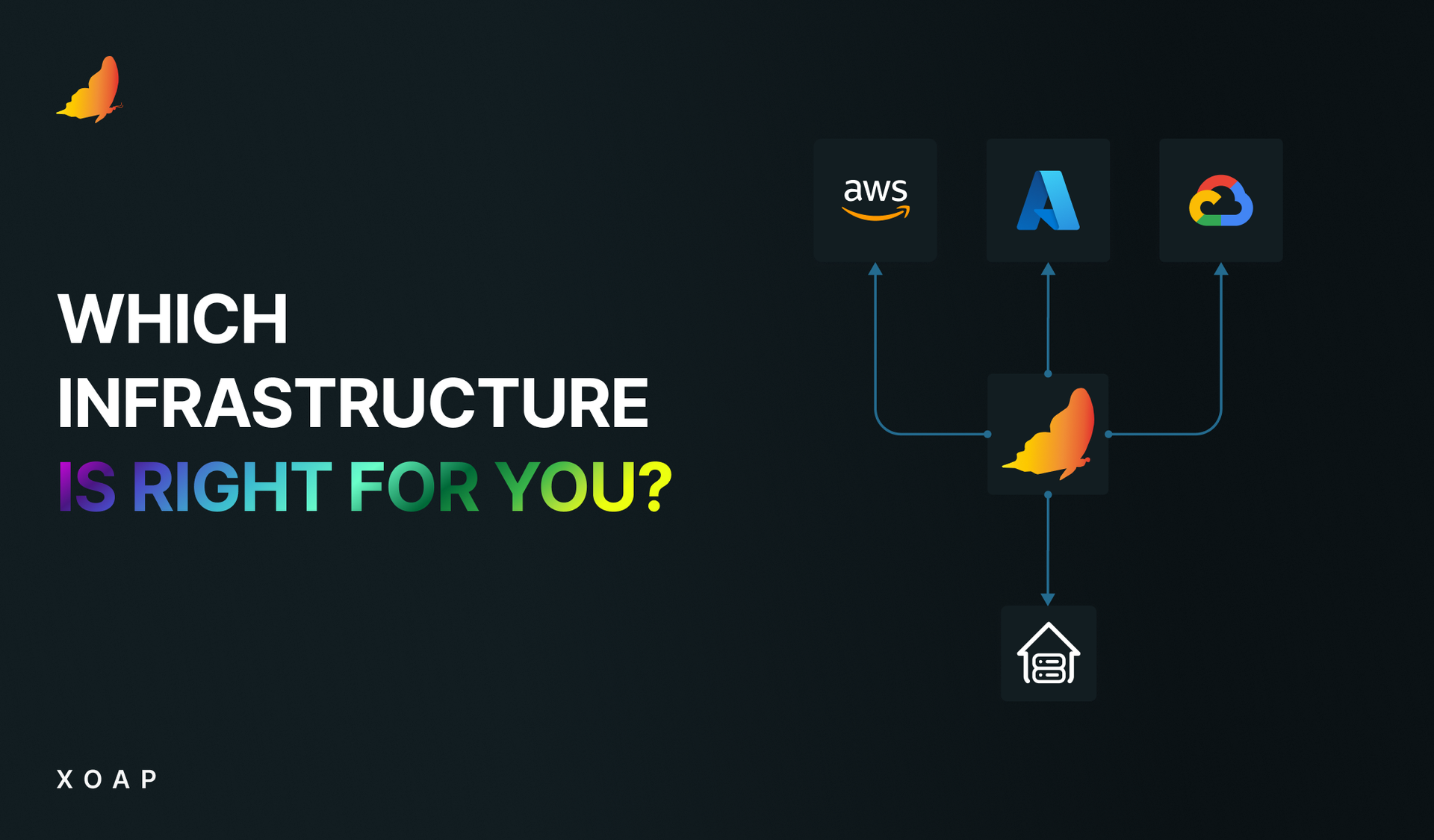
With the XOAP Connector, it manages both on-premises environments (such as vSphere, Nutanix) and cloud platforms (Azure, AWS, GCP) from a single console, without requiring users to have deep knowledge of Terraform or HCL. The platform emphasizes no-code and low-code to simplify automation workflows for users with varying technical expertise.
Spacelift: Infrastructure as code workflow orchestration
Spacelift is a platform specialized in orchestrating infrastructure as code workflows across tools including Terraform, OpenTofu, Pulumi, CloudFormation, Ansible and Kubernetes manifests. It integrates tightly with Git to enable pull request–driven workflows, allowing users to preview infrastructure changes before deployment.
Spacelift enforces governance through policy-as-code using Open Policy Agent (OPA) and Rego. It does not natively include built-in security scanning, but can integrate with external security tools to support compliance.
Complementary solutions
XOAP and Spacelift are often compared, but they serve very different purposes. Spacelift focuses on safely creating and managing infrastructure using code, while XOAP primarily handles running and maintaining systems after they exist.
That said, XOAP can also provision new resources, for example, building a VM image and creating a VM from it, but it still requires some underlying infrastructure, such as a VMware ESX host or an existing AWS account, to be in place.
For example, XOAP can:
- Build VM or cloud provider services
- Apply some system-level configurations
Keep in mind that:
- XOAP manages the “system” inside the infrastructure (it makes sure the VM or server is set up, applications are installed, patches applied and it keeps it “healthy” over time)
- Spacelift manages the “infrastructure itself” (it controls how many servers exist, which networks, storage, clusters and cloud resources are created and enforces rules on all changes at the code level)
Purpose behind both
XOAP is designed to automate the full IT “stack”, not just cloud resources. It covers system configuration, application management, image creation and workplace automation across cloud and on-prem environments. XOAP is meant to handle real systems over time, including Windows servers and Clients, Azure Virtual Desktop and hybrid environments.
Spacelift is a specialized infrastructure as code orchestration platform. It does not manage systems directly. Instead, it runs and controls tools like Terraform, OpenTofu, Pulumi, CloudFormation, Kubernetes and Ansible. Its main goal is to make sure infrastructure changes made through code are safe, approved and compliant.
Day 2 operations
XOAP is built for what happens after a platform, server or desktop already exists. It handles patching, configuration enforcement, application deployment, updates and automatic fixes when something changes or breaks. Spacelift is focused on infrastructure lifecycle through code. It detects drift at the infrastructure level, applies policies using OPA and runs IaC workflows when code changes.
The difference is: XOAP also handles Day 2 operations (maintenance, monitoring and optimization), while Spacelift mostly keeps its IaC focus.
Tools and integrations
XOAP connects to multiple clouds, hypervisors and on-prem environments. It uses PowerShell and CLI-based automation to manage systems directly, regardless of how they were created.
Spacelift integrates deeply with IaC tools and version control systems like GitHub, GitLab and Bitbucket. Everything revolves around pull requests, plans, applies and policies.
Who each platform is for
XOAP is aimed at IT admins, infrastructure teams, MSP’s and hybrid environments that need automation without requiring deep Terraform, Rego or GitOps expertise.
Spacelift is aimed at DevOps and platform engineering teams that already work code-first and want strong governance, visibility and safety around IaC at scale.
Example: creating a Windows server or AVD host
If a company uses Spacelift only, a DevOps engineer writes Terraform. Spacelift runs Terraform Plan, checks policies like encryption and naming and then runs Terraform Apply. Azure creates the VM. From there, Spacelift continues to operate within its IaC governance scope.
Spacelift does not install Windows updates, deploy Office or business apps, configure security baselines, patch the server next month, fix configuration drift or maintain the system long-term. All of that must be handled by other tools or scripts.
With XOAP, once the VM exists (is added or created in XOAP), it hardens Windows, installs applications, keeps them updated, applies patches on a schedule (if set like that with a script), enforces configuration and automatically detects drift. XOAP keeps working “every day“.
Where Spacelift excels
- Orchestrates multiple infrastructure as code tools (Terraform, Pulumi, CloudFormation, OpenTofu) and manages complex dependencies across them, a capability XOAP does not natively offer.
- Enforces policy-as-code governance using Open Policy Agent (OPA) integrated tightly with Git pull request workflows to control infrastructure changes at the code level.
- Detects when deployed infrastructure deviates from the desired state defined in IaC repositories, enabling detection of drift at the infrastructure code level.
Where XOAP excels
- Provides end-to-end lifecycle management, including installing applications, patching operating systems, enforcing configurations and continuous drift detection inside managed systems.
- Supports hybrid environments spanning cloud, on-premises and endpoint devices, managing actual systems beyond just infrastructure code.
- Maintains system health continuously through automated workflows, not solely triggered by code changes.
Gekennzeichnetes Bild von Freepik
Disclaimer:
This article is provided for informational and comparative purposes only. All product names, trademarks and registered trademarks mentioned are the property of their respective owners. The information presented reflects publicly available documentation and general product capabilities at the time of writing.
This comparison does not constitute legal, financial or procurement advice. Readers are encouraged to independently evaluate each platform based on official documentation and vendor guidance. Any references to licensing models reflect publicly announced licensing structures and are not legal interpretations.
The analysis is intended to provide an objective overview of architectural differences and intended use cases, not to assert superiority, deficiency or competitive claims.